education goals
thinking like an engineer
In 1964, American philosopher Abraham Kaplan smartly wrote, "I call it the law of the instrument, and it may be formulated as follows: Give a child a hammer, and that child will find that everything encountered needs pounding.”
The broader the base of skills, tools and experiences an engineer has, the better their engineered inventions will be. Students will learn to reach into their own varied interests, skills and experiences to recognize problems that others have missed, and develop solutions that might only be visible from their unique ways of seeing these problems. Once an engineer begins to see the world through this filter, everything will become an engineering opportunity.
drawing like an engineer
Whether scratching out the next society-shaping invention on the rear of a napkin, or precision-forming a part for manufacture in professional design software, design skills are fundamental to the engineer’s skillset. Design is the tool that permits information to be accurately conveyed between the people involved in any engineering project. Good design entices and clarifies, where poor design distracts, confuses, and can cause bridges to collapse.
Students will practice technical drawing, look at the role of typography in engineering design, draw with vectors, learn to install and use open source software, and design in all sorts of applications, from CAD to electronics prototyping software. They will also learn how to use design to convey the significance of their inventions to less technical audiences, like investors and customers.
We will also cover how professional engineers discern the fronts from the backs of napkins.
tinkering like an engineer
When handed tools, primates quickly begin experimenting with their capabilities and potential uses. Humans tend to do the same, though it seems the cell phone is the only tool most humans remain interested in exploring. Being an engineer is an exploration of how other engineers have solved problems, rapidly learning from their choices, and building an internal library of solutions so as to push the engineering bar ever higher.
The best way to build this knowledgebase is to pull things apart, to put them back together, and even to fix or improve them somewhere in between. Students will pull mechanical and electronic devices apart, figure out how they work, put them back together again, and then repurpose their devices, or internal parts to make them useful again. Through this process, they will learn all of the many ways in which reusing is even better than recycling.
developing hand-eye coordination
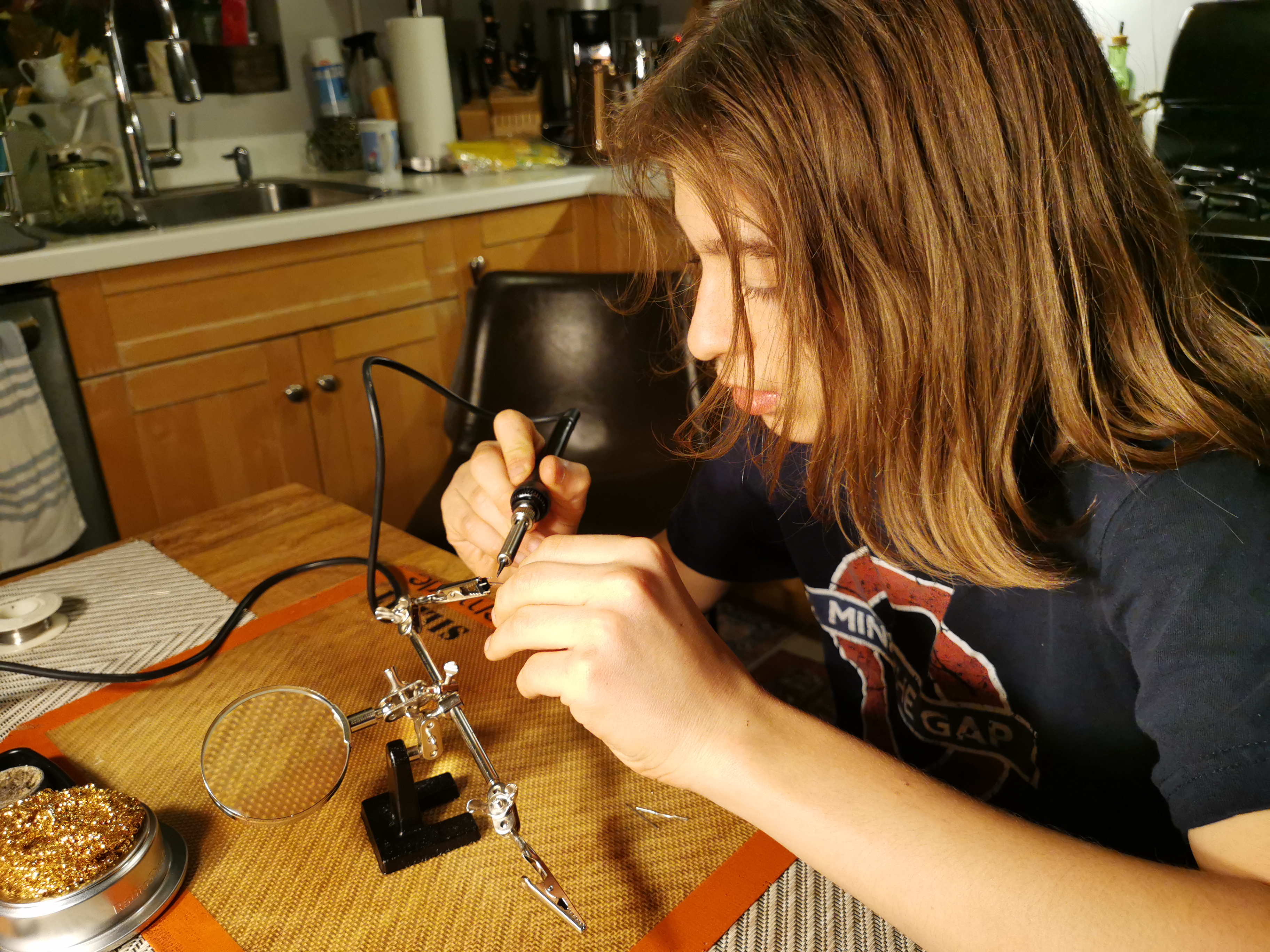
Tool use should be expressly taught and practiced, not an afterthought or an assumed ability. Students will learn to work safely, confidently and proficiently with tools. Tools are precision instruments that only work for us when we learn to use them well, and as intended – skills that only come with education and practice.
understanding materials
Tools act on materials. Students will learn how to select materials and to craft them into parts appropriate to the task. Students will work with metal, wood, plastics, hardware, adhesives, and all other materials commonly used in the conception, design, engineering, prototyping and manufacturing processes.
electronics are now ubiquitous
While most early engineering education separates hardware from software, the majority of products used in the real world – from toasters and thermostats, to elevators and cars – tightly integrate the two. Most of our projects will involve the close integration of intelligence with the physical products we create. We will use software, sensors, microprocessors, and an array of components to make our projects capable of providing interaction and feedback, and most of these projects will not be robots (though some might be robots).
working with real parts, materials, tools ands code
Students will not be learning from kits. They will be sourcing parts, materials and components in the same way that adults do. They will also be building their circuits, not buying them, and learning about each and every part they use, as they use them.
Students will not be working with simplified versions of software tools. Drag-and-drop visual programming is a lovely place to begin to understand coding concepts, but we will be using real code, written with real programming languages, in real development environments.